Code Workspace
Code Overview: Testing an API with pytest and FastAPI
This Python script demonstrates how to write integration tests for a RESTful API using the pytest framework and FastAPI. It provides a comprehensive example of testing user registration, authentication (login), token refreshing, and CRUD operations on notes.

Purpose
The purpose of these tests is to validate the functionality of the Notes App API by simulating HTTP requests using the pytest library and verifying the responses. These tests cover:
- Registering a new user.
- Logging in and generating access/refresh tokens.
- Refreshing an access token.
- Creating a new note.
- Fetching all notes for a user.
- Fetching a Specific Note.
- Updating a note.
- Deleting a note.
Each test ensures that the API adheres to expected behavior, including proper status codes, response data, and database interactions.
Key Components
1. conftest
configuration file for running pytest.
import pytest
import pytest_asyncio
from sqlalchemy.ext.asyncio import AsyncSession, create_async_engine, async_sessionmaker
from sqlalchemy.orm import sessionmaker
from fastapi.testclient import TestClient
from dao.note_dao import NoteDAO
from dao.user_dao import UserDAO
from models.model import Base, User
from main import app
from db.database import get_db


TEST_DATABASE_URL = "sqlite+aiosqlite:///:memory:"

@pytest_asyncio.fixture(scope="function")
async def override_get_db():
    """Fixture to provide a fresh test database session per test."""
    engine = create_async_engine(TEST_DATABASE_URL, echo=True)
    TestingSessionLocal = async_sessionmaker(
        bind=engine, class_=AsyncSession, expire_on_commit=False
    )

    async with engine.begin() as conn:
        await conn.run_sync(Base.metadata.create_all)

    async with TestingSessionLocal() as session:
        yield session

    async with engine.begin() as conn:
        await conn.run_sync(Base.metadata.drop_all)


@pytest.fixture
def setup_db(override_get_db):
    """Fixture to override the get_db dependency for FastAPI."""
    app.dependency_overrides[get_db] = lambda: override_get_db
    with TestClient(app) as client:
        yield client


@pytest_asyncio.fixture
async def user_dao(override_get_db):
    """Fixture to provide a UserDAO instance with a test database session."""
    return UserDAO(db=override_get_db)

@pytest_asyncio.fixture
async def note_dao(override_get_db):
    """Fixture to provide a NoteDAO instance with a test database session."""
    return NoteDAO(db=override_get_db)
2. Imports
import pytest
from fastapi.testclient import TestClient
from schemas.user import UserCreateDTO, RefreshTokenDTO
from schemas.note import NoteCreateDTO
from main import app
pytest: A powerful testing framework for Python.TestClientfrom FastAPI: Simulates HTTP requests to the API without requiring a running server.UserCreateDTO,RefreshTokenDTO,NoteCreateDTO: Pydantic models used for validating request payloads.app: The FastAPI application instance.
Test Functions
1. Registering a User
@pytest.mark.asyncio
async def test_register_user(setup_db: TestClient, user_dao):
    """Test registering a new user."""
    user_data = UserCreateDTO(username="testuser", password="testpassword", full_name="Test User")
    response = setup_db.post("/register/", json=user_data.dict())
    assert response.status_code == 200
    assert response.json() == {"message": "User created successfully"}
    user = await user_dao.get_user_by_username("testuser")
    assert user is not None
    assert user.username == "testuser"
    assert user.full_name == "Test User"
- Purpose: Validates the registration of a new user via a
POSTrequest. - Key Steps:
- Send a
POSTrequest to/register/with valid user data (username, password, and full name). - Verify that the response status code is
200 OKand the response message confirms successful user creation ({"message": "User created successfully"}). - Query the database using the
user_daofixture to retrieve the newly registered user by their username. - Validate that the user exists in the database and that their details (username and full name) match the input data.
- Send a
2. Login and Token Generation
@pytest.mark.asyncio
async def test_login_and_get_tokens(setup_db: TestClient, authenticated_user):
    """Test logging in and retrieving access and refresh tokens."""
    response = setup_db.post(
        "/token/",
        data={"username": authenticated_user["user"]["username"], "password": "testpassword"}
    )
    assert response.status_code == 200
    tokens = response.json()
    assert "access_token" in tokens
    assert "refresh_token" in tokens
    assert tokens["token_type"] == "bearer"
- Purpose: Validates the login process and retrieval of access and refresh tokens.
- Key Steps:
- Send a
POSTrequest to/token/with valid credentials. - Verify that the response contains both
access_tokenandrefresh_token, and that the token type isbearer.
- Send a
3. Token Refresh
@pytest.mark.asyncio
async def test_refresh_access_token(setup_db: TestClient, authenticated_user):
    """Test refreshing the access token using a refresh token."""
    tokens = await test_login_and_get_tokens(setup_db, authenticated_user)
    response = setup_db.post(
        "/refresh/",
        json=RefreshTokenDTO(refresh_token=tokens["refresh_token"]).dict()
    )
    assert response.status_code == 200
    new_tokens = response.json()
    assert "access_token" in new_tokens
    assert new_tokens["token_type"] == "bearer"
- Purpose: Validates the ability to refresh an access token using a refresh token.
- Key Steps:
- Use the
refresh_tokenobtained during login to send aPOSTrequest to/refresh/. - Verify that the response contains a new
access_tokenand that the token type isbearer.
- Use the
4. Creating a Note
@pytest.mark.asyncio
async def test_create_note(setup_db: TestClient, authenticated_user, note_dao):
    """Test creating a new note."""
    note_data = NoteCreateDTO(title="Test Note", body="This is a test note.")
    response = setup_db.post(
        "/note/",
        json=note_data.dict(),
        headers={"Authorization": f"Bearer {authenticated_user['access_token']}"}
    )
    assert response.status_code == 200
    response_data = response.json()
    assert response_data["title"] == note_data.title
    assert response_data["body"] == note_data.body
    assert response_data["user_id"] == authenticated_user["user"].id
    note = await note_dao.get_note_by_id(response_data["note_id"])
    assert note is not None
    assert note.title == note_data.title
    assert note.body == note_data.body
- Purpose: Validates the creation of a new note via a
POSTrequest. - Key Steps:
- Send a
POSTrequest with valid data and authentication headers. - Verify the response status code and payload.
- Check the database to ensure the note was created.
- Send a
5. Fetching All Notes
@pytest.mark.asyncio
async def test_get_notes(setup_db: TestClient, authenticated_user, note_dao):
    """Test fetching all notes for the current user."""
    note1 = await note_dao.create_note(title="Note 1", body="Body 1", user_id=authenticated_user["user"].id)
    note2 = await note_dao.create_note(title="Note 2", body="Body 2", user_id=authenticated_user["user"].id)
    response = setup_db.get(
        "/note/all",
        headers={"Authorization": f"Bearer {authenticated_user['access_token']}"}
    )
    assert response.status_code == 200
    response_data = response.json()
    assert len(response_data) == 2
    assert response_data[0]["title"] == "Note 1"
    assert response_data[1]["title"] == "Note 2"
- Purpose: Validates fetching all notes for an authenticated user via a
GETrequest. - Key Steps:
- Create two notes in the database.
- Send a
GETrequest to fetch all notes. - Verify the response contains the correct number of notes and their details.
6. Fetching a Specific Note
@pytest.mark.asyncio
async def test_get_note_by_id(setup_db: TestClient, authenticated_user, note_dao):
    """Test fetching a note by its ID."""
    note = await note_dao.create_note(title="Test Note", body="This is a test note.", user_id=authenticated_user["user"].id)
    response = setup_db.get(
        f"/note/{note.note_id}",
        headers={"Authorization": f"Bearer {authenticated_user['access_token']}"}
    )
    assert response.status_code == 200
    response_data = response.json()
    assert response_data["title"] == "Test Note"
    assert response_data["body"] == "This is a test note."
- Purpose: Validates fetching a specific note by its ID via a
GETrequest. - Key Steps:
- Create a note in the database.
- Send a
GETrequest with the note's ID. - Verify the response contains the correct note details.
7. Updating a Note
@pytest.mark.asyncio
async def test_update_note(setup_db: TestClient, authenticated_user, note_dao):
    """Test updating a note."""
    note = await note_dao.create_note(title="Test Note", body="This is a test note.", user_id=authenticated_user["user"].id)
    updated_note_data = NoteCreateDTO(title="Updated Title", body="Updated Body")
    response = setup_db.put(
        f"/note/{note.note_id}",
        json=updated_note_data.dict(),
        headers={"Authorization": f"Bearer {authenticated_user['access_token']}"}
    )
    assert response.status_code == 200
    response_data = response.json()
    assert response_data["title"] == updated_note_data.title
    assert response_data["body"] == updated_note_data.body
- Purpose: Validates updating an existing note via a
PUTrequest. - Key Steps:
- Create a note in the database.
- Send a
PUTrequest with updated data. - Verify the response reflects the updated details.
8. Deleting a Note
@pytest.mark.asyncio
async def test_delete_note(setup_db: TestClient, authenticated_user, note_dao):
    """Test deleting a note."""
    note = await note_dao.create_note(title="Test Note", body="This is a test note.", user_id=authenticated_user["user"].id)
    response = setup_db.delete(
        f"/note/{note.note_id}",
        headers={"Authorization": f"Bearer {authenticated_user['access_token']}"}
    )
    assert response.status_code == 204
    deleted_note = await note_dao.get_note_by_id(note.note_id)
    assert deleted_note is None
- Purpose: Validates deleting a note via a
DELETErequest. - Key Steps:
- Create a note in the database.
- Send a
DELETErequest with the note's ID. - Verify the response status code and that the note no longer exists in the database.
Entry Point
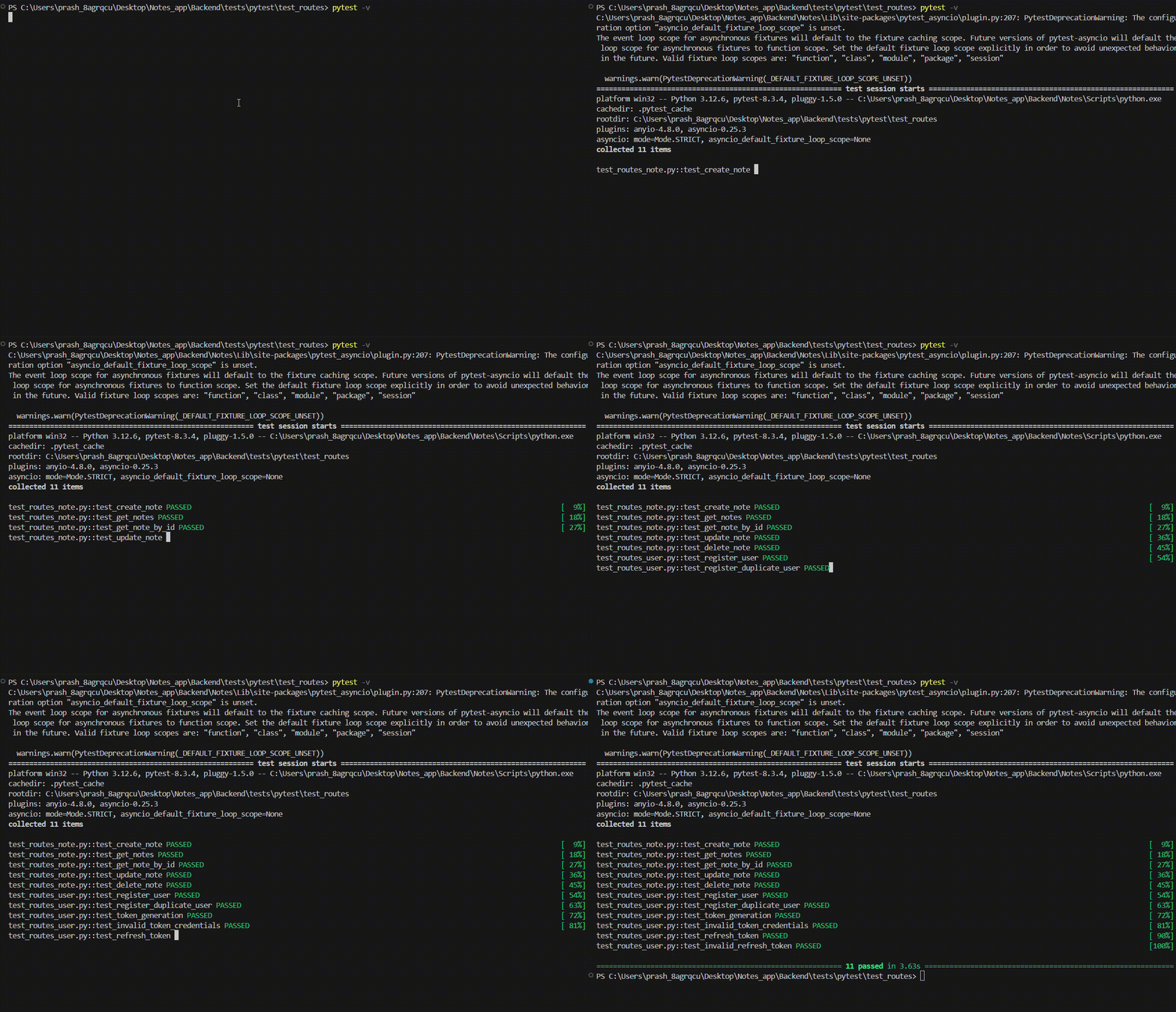
To run the tests, use the following command:
pytest -v
Output